

HIS EMINENCE KHAMBO LAMA D. JAVZANDORJ: More than a symbolic event, His Holiness the 10th Bogd Jebtsundamba is now actively pursuing scriptural studies in Mongolia

.jpg)
Мэдээллийн ZINDAA.MN сайт шинийн 1-ний билигт сайн өдөр Монголын Бурхан шашинтны төв-Гандантэгчэнлин хийдийн Тэргүүн их хамба лам, лхаарамба, 30 дугаар Хамба номун хан Дуламрагчаагийн Жавзандоржийн ярилцлагыг уншигч та бүхэндээ хүргэсэн бол өнөөдөр /2026.02.19/ англи хэл дээрх хувилбараар дахин хүргэж байгааг хүлээн авна уу.
An Interview with His Eminence Khambo Lama, Geshe Lharampa, Javzandorj Dulamragchaa, the 30th Khamba Nomun Khan and Supreme Head of Gandantegchenling Monastery, the Centre of Mongolian Buddhists.
-Gandantegchenling Monastery is not only the Centre of Mongolian Buddhists and a revered site for prayer and pilgrimage, but also a distinguished institution committed to the cultivation of wisdom and compassion, the pursuit of philosophical inquiry, the preservation of religious and cultural heritage, and the flourishing of the Dharma. Could you kindly share your reflections on this?
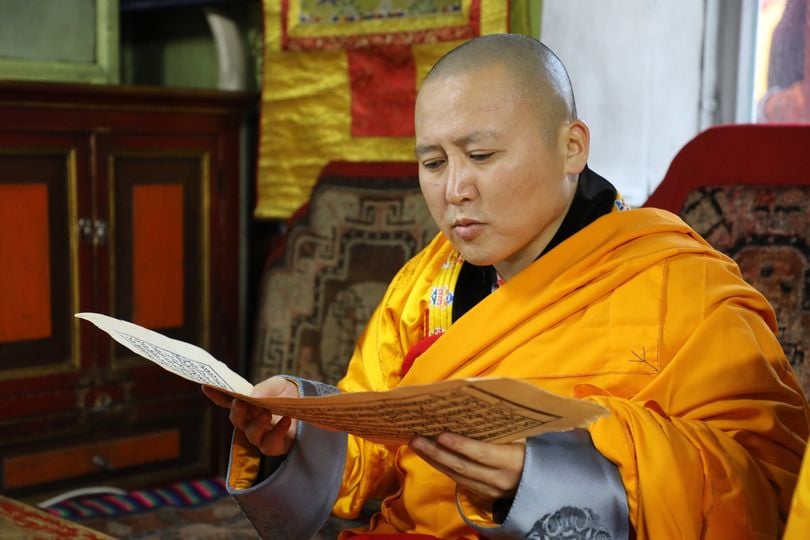
-Gandantegchenling Monastery is a place dedicated to offering happiness, inner peace, and intellectual and spiritual awakening to all beings. In this spirit, those who are suffering, searching for tranquility, wisdom, and insight often find their way here. We carry out our activities with the sincere aspiration to help fulfil their spiritual aims and heartfelt wishes. People come to the monastery seeking solace during times of illness, hardship, or mental distress. Here, they request prayers and pujas, behold the sacred images of the Buddhas, listen to Dharma recitations, and connect with the monks through faith and devotion. Through these acts, they gradually lessen their suffering and find inner calm and serenity. Although we do not yet have a fully structured curriculum of spiritual education accessible to everyone at all times, our senior teachers and monks are offering public Dharma teachings and programmes during non-working hours, aimed at cultivating understanding and spiritual development among the wider community.
At the Janraisig (Avalokiteshvara) Dratsang, we have initiated regular monthly prayer sessions in the Mongolian language for lay devotees. This allows participants to better understand the meaning of the prayers being recited, thereby deepening their inner peace. Furthermore, the availability of teachings and explanations in Mongolian plays a significant role in promoting spiritual literacy and enhancing the public’s appreciation of the Dharma. Gandantegchenling Monastery is also making efforts to reach a broader audience through digital platforms by sharing explanations, reflections, and interviews aimed at helping people cultivate peace of mind and navigate their inner world with clarity and wisdom.
-How many Dratsangs (monastic colleges) does Gandantegchenling Monastery have, and what are their areas of focus?
-As of now, Gandantegchenling Monastery comprises several Dratsangs, each with its distinct focus. There are three major philosophical colleges: Dashchoimpel, Gungaachoilin, and Idgaachoinzinling Dratsangs, dedicated to the in-depth study of Buddhist philosophy and dialectics. Also, there are ritual and practice-oriented Dratsangs such as Janraisig Dratsang (dedicated to Avalokiteśvara), Jud Dratsang (specialising in tantric ritual practice), Duinkhor Dratsang (Kalachakra), Badma Yoga Dratsang (Vajrayoginī), and Manba Dratsang (Traditional medicine).
We also oversee the Mongolian Buddhist University and Public Secondary School No.112 in Ulaanbaatar. These institutions aim to provide a conducive environment for training future generations of monks, to nurture their education in the Dharma, and to serve the spiritual needs of the lay community through rituals, prayers, and blessings.
-Many Mongolian monastics are currently studying in India. What kind of support do they receive from the Indian Government during their studies? And what support is offered from the Mongolian side? How does Gandantegchenling Monastery maintain contact with its monks studying there?
-Presently, over 400 Mongolian monks are studying at more than ten major monasteries in India. One of the foremost forms of support extended by the Indian Government is the provision of long-term student visas, issued free of charge and without difficulty. We are sincerely grateful to the people of India for this generous assistance. Furthermore, the Indian side has also begun providing living stipends for student monastics.
From our side, Gandantegchenling Monastery has established a scholarship programme for those monastics who are pursuing advanced philosophical studies and preparing for the Lharampa degree examinations — the highest academic title in the Gelug tradition — should they wish to apply. For monks returning to Mongolia who require assistance in obtaining new visas to continue their studies, Gandantegchenling Monastery also offers administrative and logistical support.
Also, we are striving to remain attentive to any challenges our monks face during their time in India — whether related to health, education, or day-to-day living. We actively maintain close communication with the respective monastic colleges to ensure our students are well cared for.
-You yourself studied in India for many years and earned the title of Lharampa degree. What are the study conditions like?
-Conditions vary depending on the location, but the monasteries where we studied — such as Sera Jey, Drepung Gomang, Guyto, and Gyudmed — are great seats of learning established under the guidance of His Holiness the Dalai Lama. These are environments where all essential needs are provided so that one may focus entirely on Dharma study.
Monastics receive three meals a day, new robes at regular intervals, and free education. There is no tuition fee — our focus is solely on diligently studying the scriptures. The level of Buddhist education offered is profound and comprehensive. Although India is a warm country, the regions where we studied often have pleasantly cool evenings, making it comfortable for learning and contemplation.
In the early years, we shared rooms, three to a room, but later had the opportunity to stay individually. The accommodation, food, and overall conditions were supportive and conducive to deep Dharma practice.
-What role does Gandantegchenling Monastery play in Mongolia–India relations? For thousands of years, Mongolians have referred to India as our “Spiritual Neighbour.” We have venerated it as the “Land of the Buddha” and the “Land of Jambudvīpa,” and we have enshrined countless sacred scriptures—particularly the Kangyur and Tengyur—as well as sacred images. In your view, how do you see this relationship?
-Buddhism has spread in Mongolia in three distinct historical waves, the first of which originated directly from India. This is why we revere India as a spiritual sibling. From ancient times, the transmission of Buddhist texts, teachings, and culture has tied our two nations together. Gandantegchenling Monastery, the Centre of Mongolian Buddhists, along with other monasteries, has upheld and continued this precious spiritual lineage. We train our monastics in India, and these profound religious and cultural ties have flourished from the past into the present. We are confident they will continue to grow stronger in the future.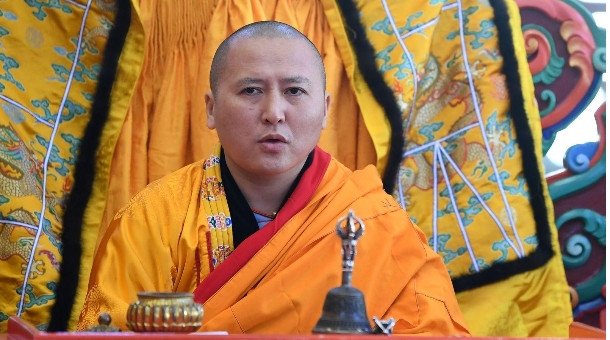
-When Mongolia transitioned to democracy, Buddhism also experienced a revival. At that pivotal time, H.E. Kushok Bakula Rinpoche served as India’s Ambassador to Mongolia. How do you assess his contribution to the resurgence of Buddhism in Mongolia?
-Before Mongolia's democratic transition in the early 1990s, Kushok Bakula Rinpoche served as India’s Ambassador to Mongolia. In that capacity, he played a vital role in revitalising not only Buddhism, which had declined during the previous regime, but also Mongolia’s traditional culture. Despite his advanced age, he travelled extensively to rural provinces, offering spiritual blessings, teachings, and guidance. His tireless service left a lasting impact, further strengthening the historic spiritual and cultural relationship between our nations.
-How would you describe the current state of Mongolia–India relations?
-As I mentioned earlier, our two countries are bound by spiritual kinship. A clear example of this is India’s generous printing of the Mongolian editions of the Kangyur and Tengyur, which it has presented to Mongolia as a cultural gift. India has also facilitated the enshrinement of relics of the Buddha in Mongolia on two separate occasions. In 2025, on the auspicious occasion of Saga Dawa Duchen (Buddha’s birthday), India will again allow relics—this time of two of the Buddha’s chief disciples—to be brought to Mongolia for public veneration. This is a powerful expression of our flourishing religious and cultural exchange.
-What distinguishes Mongolian Buddhism for foreign pilgrims and visitors from other Buddhist countries?
-One unique feature of Mongolian Buddhism is its third and most recent wave of spreading, which is deeply connected to our First Bogd Jebtsundamba, Öndör Gegeen Zanabazar—a direct descendant of the Golden Lineage of Chinggis Khan. Under his guidance, the foundational structure of Mongolian Buddhism was shaped. Öndör Gegeen Zanabazar skilfully integrated the ten traditional sciences of Buddhism—particularly the arts and crafts (silpakarmasthāna) and inner knowledge (adhyātmavidyā)—and greatly contributed to their flourishing in Mongolia. Our monastic education system, including the translation of sacred texts, the unique style of monastic robes established by Öndör Gegeen, and their rich symbolic meaning, as well as our distinct temple architecture and chanting style, set us apart from other traditions. Notably, both the Mahāyāna sūtras and Vajrayāna tantras were equally preserved and propagated under his guidance, which remains a distinguishing feature of our lineage.
Another distinctive feature is that Buddhism in Mongolia developed uniquely by harmonising with the way of life and culture shaped by the country’s four seasons and vast landscapes. Over the course of many centuries, the Mongolian people have not only embraced and propagated the Dharma, but have also composed and preserved numerous Buddhist texts tailored to the unique cultural and spiritual needs of Mongolian society. These works are not only revered in Mongolia but have also earned recognition across India and Tibet, reflecting their profound value and impact. Buddhism has flourished in Mongolia in three major waves — the first directly from India, and the latter two primarily through Tibet. Notably, Mongolia is among the few nations that has successfully translated the complete Kangyur—the words of the Buddha—and the Tengyur—the commentaries of Indian masters—into its native language, preserving the sacred teachings in a form accessible to its people.
-Could you briefly comment on the recognition of the 10th Bogd Jebtsundamba?
-The enthronement of His Holiness the 10th Bogd Jebtsundamba, Supreme Head of Mongolian Buddhism and the embodiment of Vajradhara, has brought immense joy, inspiration, and renewed faith to monastics and lay devotees alike. More than a symbolic event, he is now actively pursuing scriptural studies in Mongolia. We regard this as a rare and auspicious juncture, and we firmly aspire that His Holiness will continue to contribute immeasurably to the preservation and flourishing of the Dharma for generations to come.
-What are some of the new initiatives currently being undertaken by Gandantegchenling Monastery?
-We have recently launched a project entitled “Buddhism and Science” in collaboration with Mongolian National Broadcasting (MNB), the Mongolian Academy of Sciences, and
Gandantegchenling Monastery. The aim is to highlight the scientific spirit inherent in the Buddha’s teachings. When we examine the Kangyur and its commentarial Tengyur, we find many parallels with modern scientific perspectives—and in some cases, even deeper insights. At the international level, His Holiness the Dalai Lama has initiated and expanded numerous activities in this field. In alignment with his vision, we are also contributing by working collaboratively with scientists to further the development of Buddhist studies—particularly in the area of Buddhist psychology—with the aspiration of benefiting all sentient beings and advancing the well-being of humanity.
Another major initiative is the “Cultural Heritage & Origins” project, jointly undertaken by the Institute of Science and Culture of Gandantegchenling Monastery, the Institute of Archaeology of the Mongolian Academy of Sciences, and Golomt Bank. Through this collaboration, significant archaeological findings have helped push back the historical timeline of Buddhism’s transmission in Mongolia. While it was previously believed that the Dharma first spread in the 7th century, evidence now suggests that it may have already been present as early as the 4th century. This research plays a crucial role in restoring the authenticity and accuracy of Mongolia’s spiritual and historical narrative.
As part of our commitment to the welfare of society and the promotion of spiritual education, we have begun offering meditation courses across various districts of the capital and in the countryside. These initiatives have proven to be remarkably effective. We also conduct regular educational programmes for our monks to enhance their capacity for service.
-Recently, Gandantegchenling Monastery enshrined a sacred image of Chinggis Khaan. Could you tell us more about that?
-From ancient times, Mongolians have revered Chinggis Khaan as a manifestation of the Nirmanakaya—the emanation body of a Buddha. In honour of this sacred view, Gandantegchenling Monastery has enshrined a holy representation of the Great Bogd, based on historical sources and ritual texts that describe his enlightened qualities. This image was consecrated so that foreign guests, pilgrims, and dignitaries visiting the monastery may witness how Mongolians venerate Chinggis Khaan not only as a national hero, but also as a spiritual embodiment.
-How is the Monastery’s international engagement progressing?
-Our international engagements have long been active and have expanded meaningfully in recent years. In January 2025, we had the honour of travelling to Italy to meet with His Holiness Pope Francis. We held respectful interfaith discussions about potential collaborations in service of global peace and the common good. We also gave lectures at seven universities across Europe and engaged in scholarly dialogue. In April, we signed Memorandums of Understanding with two more European institutions to deepen academic cooperation.
Moreover, we continue our involvement with the Asian Buddhist Conference for Peace (ABCP), an international Buddhist organisation headquartered in Mongolia and recognised by the United Nations. Its mission is dedicated to global peace, harmony, and the welfare of all sentient beings. Through the ABCP and other channels, we collaborate with religious leaders worldwide to promote ethical values and social well-being. We also aspire to establish partnerships with international universities, research institutes, and scholars in order to advance the field of Buddhist studies—particularly by bringing the profound textual heritage composed and transmitted by Mongolian monastics into the realm of academic inquiry and global scholarly dialogue
Source: Welcome To Mongolia
By D.Oyuntsetseg
Сэтгэгдэл ( 0 )